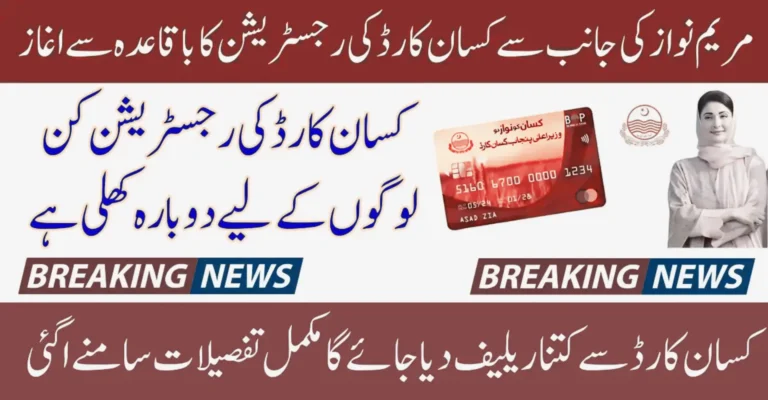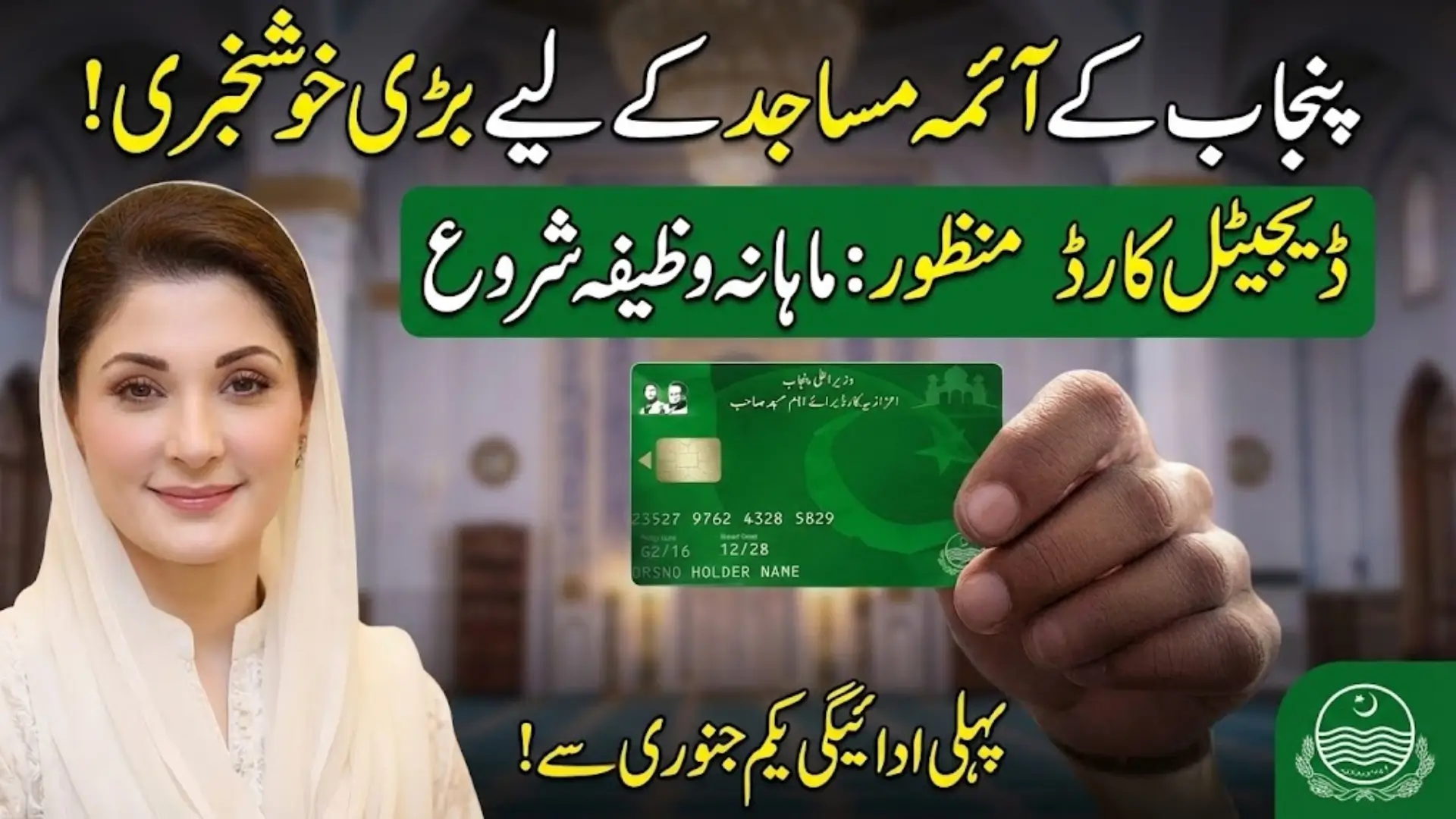
In a major step towards supporting religious leaders, the Chief Minister of Punjab has announced the launch of honorarium cards for Imams of mosques across the province. The initiative aims to provide a regular, transparent and dignified financial support system for Imams, who play a central role in community life but often live with limited or irregular income.
This move is being viewed as both a social welfare measure and an effort to strengthen the link between mosques, communities and the provincial government.
Let’s break it down in simple language, step by step.
Quick Overview of the CM Punjab Honoraium Card Scheme
| Feature | Details (Update with Latest Figures) |
|---|---|
| Scheme Name | CM Punjab honoraium card for mosque Imams |
| Announced By | Chief Minister of Punjab |
| Main Beneficiaries | Officially appointed Imams of mosques in Punjab |
| Type of Support | Monthly financial honorarium via digital card |
| Payment Method | Direct transfer to bank-linked or ATM-style honoraium card |
| Purpose | Financial relief, dignity, and transparent state support |
| Implementing Authority | Provincial government / Auqaf & religious affairs dept |
| Status | Gradual rollout; district-wise registration and verification |
| Application Channel | Through mosque committees / local administration |
Use the latest notifications to fill in status, amount, and dates accurately.
Apply Now: CM Punjab E-Taxi Scheme 2025

Key Points at a Glance
- Digital honorarium cards to be issued to registered mosque Imams in Punjab
- Monthly stipend to be transferred directly to the card
- System designed for transparency, traceability and quick payments
- Aimed at improving financial security and social dignity of Imams
What Is the Honorarium Card Scheme?
Under this scheme, the Punjab government will provide a monthly honorarium to mosque Imams through special cards, similar to ATM or debit cards. Instead of relying only on:
- Small salaries from mosque committees
- Unpredictable donations from worshippers
- Seasonal gifts during Ramadan or Eid
Imams will now receive a regular amount every month, funded by the provincial government.
The card will be linked to a digital payment system so that the stipend is:
- Sent directly by the government
- Withdrawn easily from ATMs or partner banks
- Recorded digitally for full transparency
For many Imams who serve in low-income and rural areas, this can become an essential and stable part of their monthly income.
check now : CM Punjab Free Solar Panel Scheme 2025 How 100,000 Homes Benefit
How the Honoraium Card System will Works
Eligibility: Who Can Apply?
Exact rules can vary by notification, but generally, the scheme focuses on:
- Officially appointed Imams of mosques in Punjab
- Imams with valid CNICs and proof of appointment
- Mosques verified by local committees or the Auqaf department
If the mosque is informal or unregistered, the Imam may need extra verification from:
- Local union council
- Neighborhood elders
- Religious affairs officials
Documents Commonly Required
Most Imams can expect to provide:
- CNIC copy
- Recent photograph
- Proof of being the mosque’s Imam (appointment letter or committee letter)
- Contact details and address
Sometimes, the mosque’s registration papers or a verification form signed by the committee will also be needed.
Step-by-Step: From Registration to First Payment
Step 1: Verification at Local Level
The Imam usually starts with:
- Filling out a registration form
- Getting it verified by the mosque committee or local religious body
This step can feel slow and frustrating in some areas, but it’s crucial to keep the system clean.
Step 2: Approval and Issuance of the Honoraium Card
Once verified, the data is sent to the district or provincial office.
If approved, the Imam is:
- Added to the beneficiary list
- Issued an honoraium card (often linked to a bank or payment partner)
Step 3: Monthly Digital Transfers
After activation, the monthly amount is:
- Transferred directly to the honoraium card
- Withdrawn through ATMs or designated payment points
- Sometimes used for basic digital payments where available
No envelopes, no lines, no humiliation—just a straightforward, trackable payment.
Why This Scheme Is Important in the Punjab
1. Financial Stability for Religious Leaders
In Pakistan, especially in Punjab, a large number of Imams:
- Live on modest or irregular income
- Support families with very limited financial resources
- Depend heavily on donations, which can fluctuate month to month
By providing a state-backed honorarium, the government is trying to give Imams:
- A minimum level of financial security
- The ability to plan household expenses
- Relief from constant financial stress
When basic needs are relatively stable, Imams can focus more seriously on their core responsibilities: leading prayers, guiding youth and serving the community.
2. Formal Recognition of the Imam’s Role
The announcement also carries a strong message of respect and formal recognition. In Pakistan, Imams are not only prayer leaders; they are:
- Teachers of Quran and basic Islamic knowledge
- Advisors in family and community disputes
- Spiritual guides during personal and collective crises
By officially linking Imams to a provincial welfare program, the Punjab government is signaling that:
The services of mosque Imams are not just religious, but also social and public in nature — and deserve state-level acknowledgment.
This can help raise the professional and social status of Imams, especially in small towns and villages where they are central figures in daily life.
3. Strengthening Mosque–Community Relations
In many Punjabi communities, the mosque is a natural hub for:
- Religious education
- Charity and welfare work
- Social awareness and guidance
With better financial support, Imams may be able to:
- Spend more time with youth, guiding them away from drugs, crime and extremism
- Organize community-based activities such as Quran classes, counseling sessions and awareness talks
- Play a more active role in promoting social harmony and tolerance
In a province with such a large population, supportive and stable mosque leadership can make a measurable difference at the grassroots level.
How the Honorarium Cards Will Work
Official notifications and detailed rules will define the exact mechanism, but the basic structure of the scheme is expected to include:
1. Registration and Verification of Imams
First, Imams will have to be registered and verified. This may involve:
- Submitting CNIC and personal details
- Providing proof that they are the official Imam of a mosque
- Verification by relevant authorities such as the Auqaf department or local committees
This process is crucial to ensure that the scheme benefits genuine, currently serving Imams, and to prevent misuse or duplication.
2. Issuance of Digital Honorarium Cards
After verification, each eligible Imam will receive a digital honorarium card, most likely linked to:
- A bank account, or
- A government-managed payment system
Through this card, the government will transfer the monthly stipend. Imams will be able to:
- Withdraw cash from ATMs or designated points
- Check their balance easily
- Keep a basic record of the support they are receiving
This reduces the need for physical cash distribution and limits the role of middlemen.
3. Transparent and Traceable Payments
One of the strongest features of the scheme is digital transparency. Every payment made through the card will:
- Leave a digital record
- Be traceable in audits
- Reduce the chances of corruption, delay or deduction
For the government, this offers better control over public funds. For Imams, it offers speed and clarity: they know when and how much they have received, without depending on any local intermediary.
Possible Challenges and Questions
While the scheme has been widely appreciated in principle, a few important questions remain:
1. Who Exactly Will Be Covered?
- Will all mosque Imams in Punjab be included, or only those registered with the Auqaf department?
- What about small, unregistered mosques in villages and katchi abadis?
- Will khateebs and naib Imams (assistant Imams) also be considered in future?
Clear and transparent eligibility criteria will be essential to prevent confusion and complaints.
2. Fairness and Non-Political Implementation
For such a sensitive and important scheme, it is crucial that:
- No political favoritism is involved
- Imams from all maslaks (schools of thought) are treated fairly
- Local verification does not become a tool for exclusion or discrimination
The credibility of the program will depend heavily on how neutral and inclusive the implementation is.
3. Long-Term Sustainability
Another big question is about the long-term continuity of the scheme:
- Will future governments continue the honorarium, or will it end with a change in leadership?
- Is there a separate budget line to support this program every year?
For Imams, the honorarium is truly useful only if it is reliable and consistent over time.
Public and Religious Reaction
Initial reaction from religious circles and the general public is expected to be largely positive, because:
- The scheme directly supports those who serve at the front line of religious life
- It provides long-awaited financial relief and formal respect
- It brings Imams into a more organized welfare framework
At the same time, some people may raise concerns about:
- The independence of the pulpit if Imams come under formal state support
- The risk that some may try to use the scheme for political influence or control
- The fairness of who is included and who is left out
Balancing state support with religious autonomy will remain an important challenge.
What This Means for the Future
The introduction of honorarium cards for mosque Imams in Punjab could be the starting point of broader reforms in the way religious leadership is treated in Pakistan. In the future, similar schemes could include:
- Health insurance or basic medical coverage for Imams
- Pension or old-age support for retired religious leaders
- Training programs on topics like community leadership, counseling and social issues
If implemented honestly and efficiently, this initiative can:
- Improve the standard of living of thousands of Imams
- Strengthen the positive role of mosques in community building
- Build greater trust between religious institutions and the provincial government
For now, the announcement of digital honorarium cards marks an important policy shift: it recognizes that supporting Imams is not just an act of charity, but an investment in the social and spiritual health of Punjab’s communities.